Conoce la residencia Centro gerontológico Lamourous Zubiaurre en Donostia/San Sebastián
Lamourous, en Intxaurrondo, es uno de nuestros centros de referencia al ser pionero en la aplicación del Modelo de Atención Centrado en la Persona y dinamizador del Modelo Matia de Atención.
Información de contacto
Donostia/San Sebastián, 20015 Gipuzkoa
Especialidades y tratamientos
- Alzheimer
- Demencia
- Parkinson
Facilidades e instalaciones
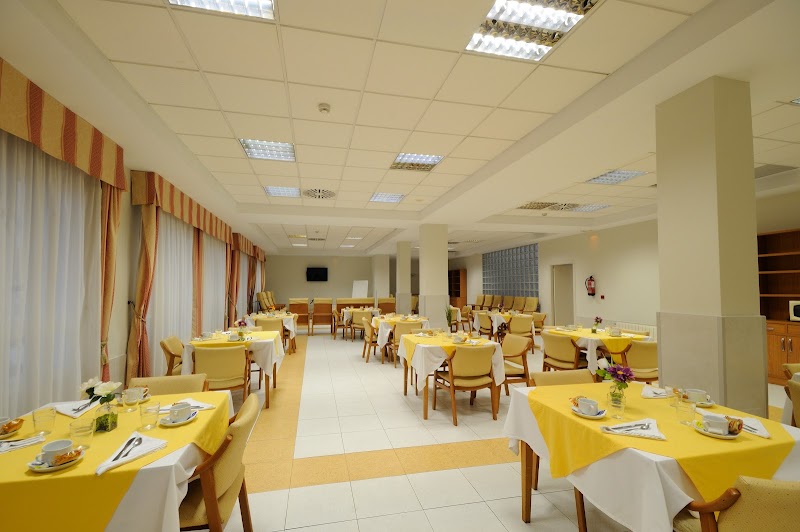
- Comedor
- Peluquería
- Sala de actividades
- Sala de estar
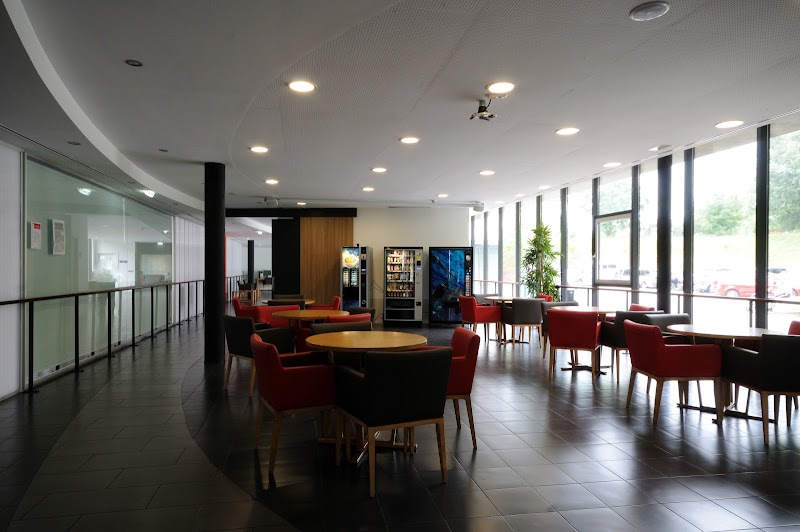
- Zonas comunes
Servicios destacados
- Médico
- Fisioterapia
- Logopedia
- Podología
- Peluquería
- Lavandería
- Cocina propia
- Estancias temporales
- Cuidados paliativos
- Centro de día
- Farmacia
- Atención personalizada
- Acompañamiento
- Psicología
- Trabajo social
Titularidad
Privada
Calcula tus ayudas para esta residencia aquíOpiniones
El Centro gerontológico Lamourous Zubiaurre presenta una situación profundamente contradictoria: mientras que algunos usuarios destacan un trato dignificante y cariñoso en la Unidad Psicogerontológrica, la mayoría de las reseñas revelan graves deficiencias que incluyen negligencia médica, falta de recursos básicos (como aire acondicionado durante olas de calor), comunicación deficiente con familias, manipulación de registros médicos y actitudes despectivas del personal. Las experiencias negativas documentan un patrón sistemático de abandono del bienestar del paciente en
- Amaia Rico Urbieta
At the Lamorouse nursing home, on August 12th, my father passed away in his room. It turns out they don't have air conditioning!!!!!!!!! And on the 26th, I went to see my mother, and they had a few air conditioners ready to be installed!!!!!! This was after they suffered through the heat wave without adequate resources and after several complaints from the families of other residents. The worst and most unbelievable thing is that to this day, the nursing home still hasn't called me to inform me of his death!!!!!!!!!!!!!! It was a nightmare, unbelievable. This is outrageous, and who knows what else will happen.
- Memoriaenvoz2025
My mother suffered significant deterioration in this nursing home, the result of an alarming chain of negligence. For weeks, I warned the medical staff about her obvious discomfort: pain, fever, foul-smelling urine… My pleas fell on deaf ears. Not a single test, urine culture, or treatment was performed. The neglect was total, a constant throughout her year-long stay. We experienced medical errors, neglect, abandonment, treatment delays, and a series of tremendously painful events. We legally requested my mother's medical records, a copy of the original, and received a botched and humiliating Word document, which once again demonstrates what they are made of. "The medical records": a dehumanizing document, manipulated from the first line to the last. No signatures, no traceability, no rigor. A story that reflects neither my mother's actual care nor her clinical progress, but rather an institutional strategy to discredit the patient and her family, a document that seems more like something out of a horror story. An institutional narrative focused on dehumanizing the patient and her family, constantly bordering on obsession with the family, a systematic denial of the patient's pain, successively ignoring the family's perceptions, and constantly discrediting our name. They even fabricated demonstrably false episodes and accusations, and loaded the document with subjectivity, judgments, contempt, and insults. In this institution, where control, the image, and the comfort of the staff are prioritized over the patient's well-being, the involved family member becomes an enemy to be neutralized. It's a defensive strategy they use, such as manipulating medical records, writing veiled accusations, distorting attitudes, creating labels, etc. Because seeing that someone is observing, pointing out errors, and providing better care than they do, makes their negligence more visible. And then the institutional punishment begins: the patient is ignored, medical records are manipulated, my warnings are ridiculed, we are accused, the truth is distorted. What should have been an alliance for my mother's well-being was turned into an emotionally draining struggle. As if that weren't enough, the entire "medical record" is constructed as a self-justifying narrative, where they, the same people who ignored every warning sign I raised for months and committed negligence, appear as those who "detected" the symptoms, "monitored" the pain, "reviewed" the health status... How could they write anything positive about the family if, for the entire year, their obsession was to completely dehumanize us? Instead of objectively recording the facts and discussing my mother's clinical progress, the medical record is used as an institutional weapon: everything positive is attributed to them, even when they weren't there, and everything problematic is projected onto the family. This is not a medical record copied from the original, as legally requested. It's a pamphlet written in a schoolyard tone after reporting the events: without traceability, without signatures, without evidence or ethics. A story that doesn't put the patient, my mother, the true protagonist, at the center, nor reflect her health progress. Instead, it reproduces an institutional culture focused on protecting itself through harm, falsification, and discrediting those who care for, accompany, and denounce the obvious. Not only have they failed in caring for my mother in life, but they have also left written evidence of the kind of practices they uphold and that we experience firsthand. And if you decide to publicly recount what you experienced, you are harassed with calls, warnings, and requests to withdraw your testimony, arguing that they "cannot defend themselves publicly." But what is worrying is not the criticism, but the brutal lack of self-criticism in the face of what we have experienced. The essential thing, the well-being of the patient and their dignity, seems to take a completely backseat to protecting the institutional image.
- Leire Ramon
The doctor's rudeness and arrogance are appalling, especially considering it's a nursing home where our grandmother lives. We were treated with disrespect and a lack of courtesy. Incomprehensible.
- Marijo Pelayo
A perfect welcome! At the Psychogeriatric Unit, the treatment was dignified, patient, and caring. We have no words to thank each of the professionals who cared for us with such affection and respect.
- Marta Fernandez
The best center I've ever been to! When you walk in, it doesn't give you that feeling of sadness. In fact, the first time I arrived, I thought, "I need a bellboy to pick up my bags."